
Java
Vaadin Deployment on Hetzner — Part 0: Preparing a Debian Server
Foundation article of the series Vaadin – Deployment on Hetzner. It produces the server on which the following parts put a Vaadin …
First of two articles on software bills of materials. One application, four delivery formats, one server — and the question of what the packaging reveals about the supply chain. …
Foundation article of the series Vaadin – Deployment on Hetzner. It produces the server on which the following parts put a Vaadin …
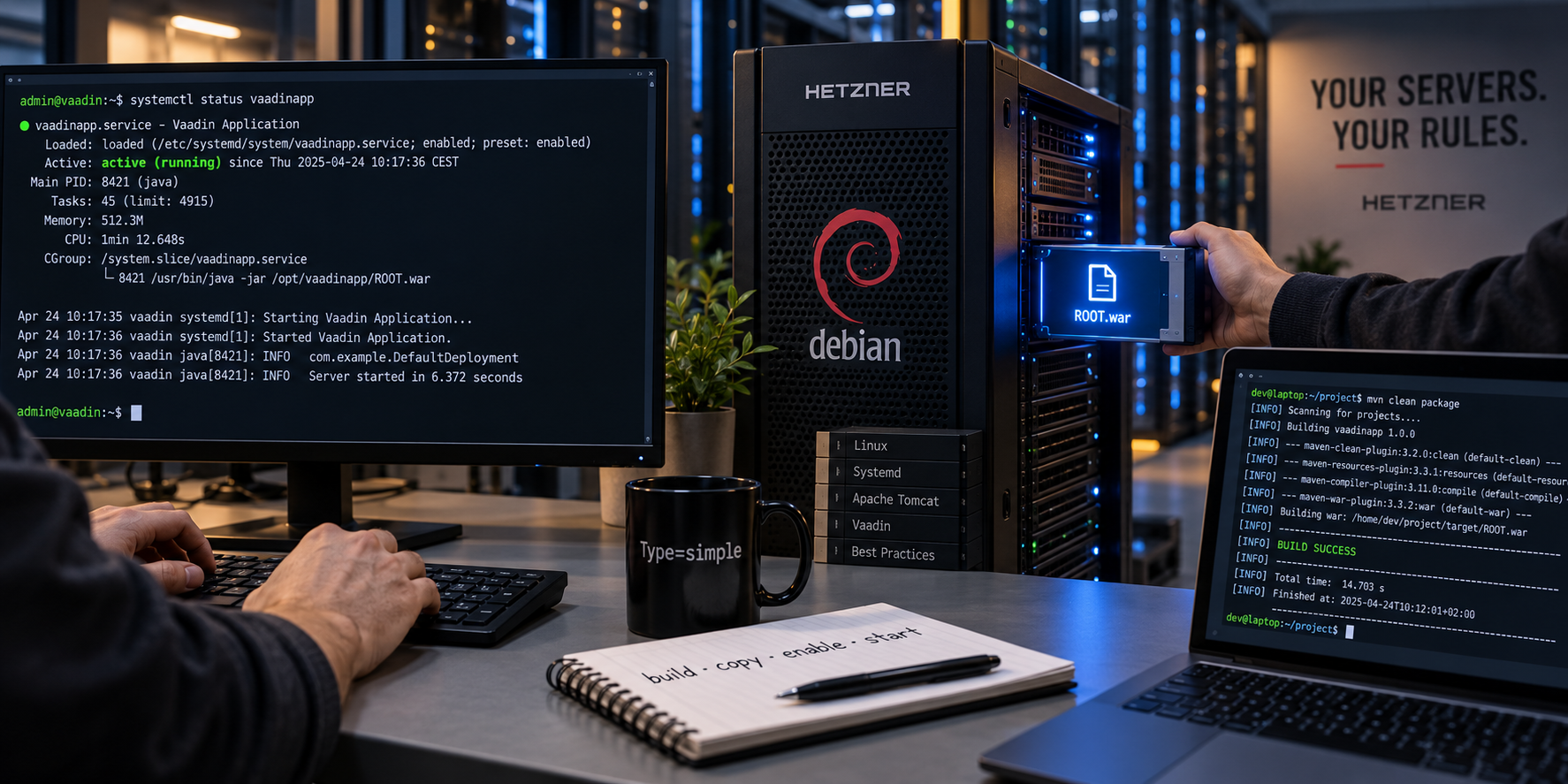
Reference article in the series Vaadin – Deployment on Hetzner. From the production build to a hardened systemd service: Jetty, WAR, and …
Continuation of Part 1 of the series Vaadin – Deployment on Hetzner. From a local service to a publicly reachable application: Caddy, HTTPS, …
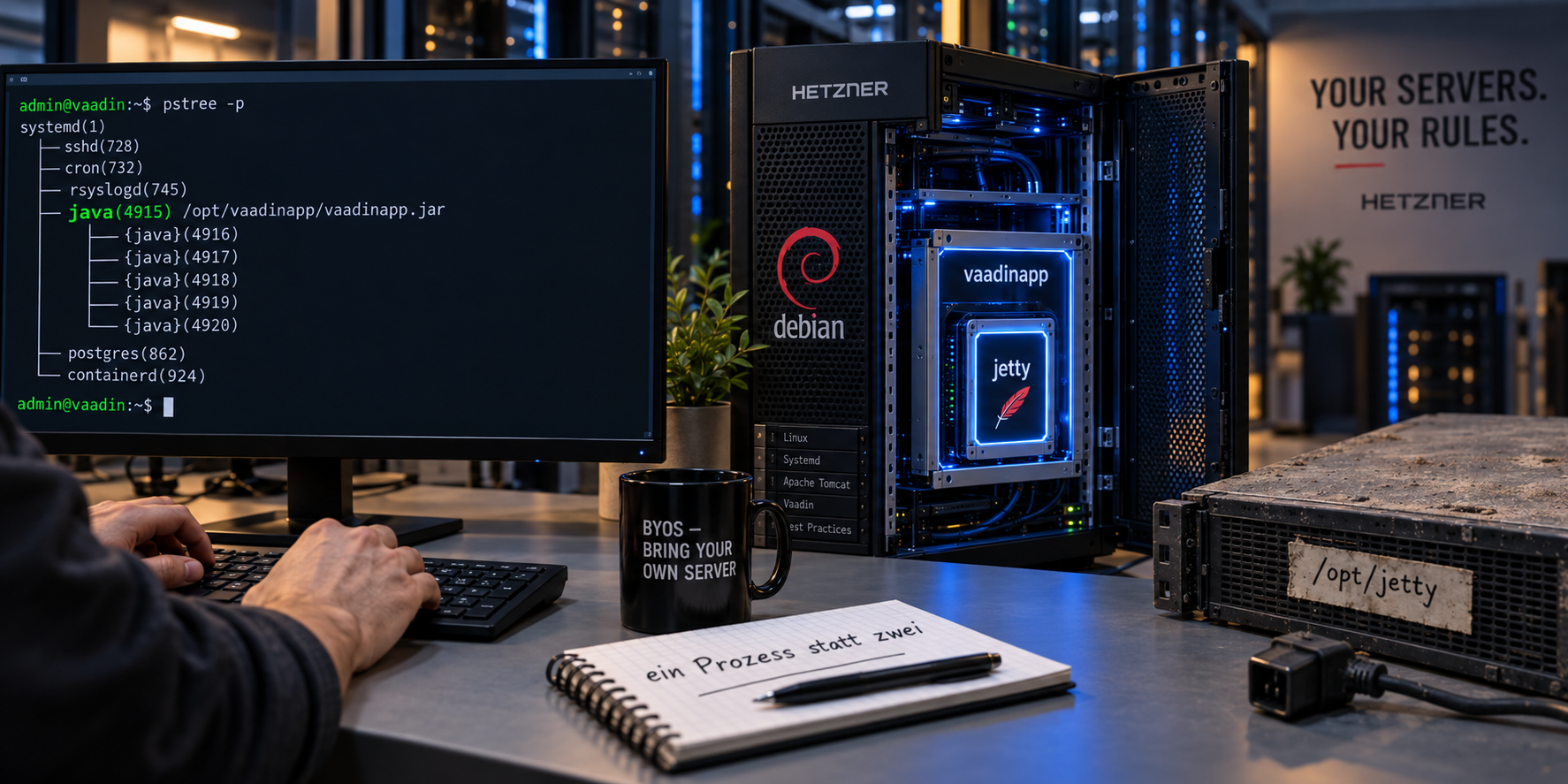
Third installment of the series Vaadin – Deployment on Hetzner. Jetty turns from a separately installed server component into a part of the …
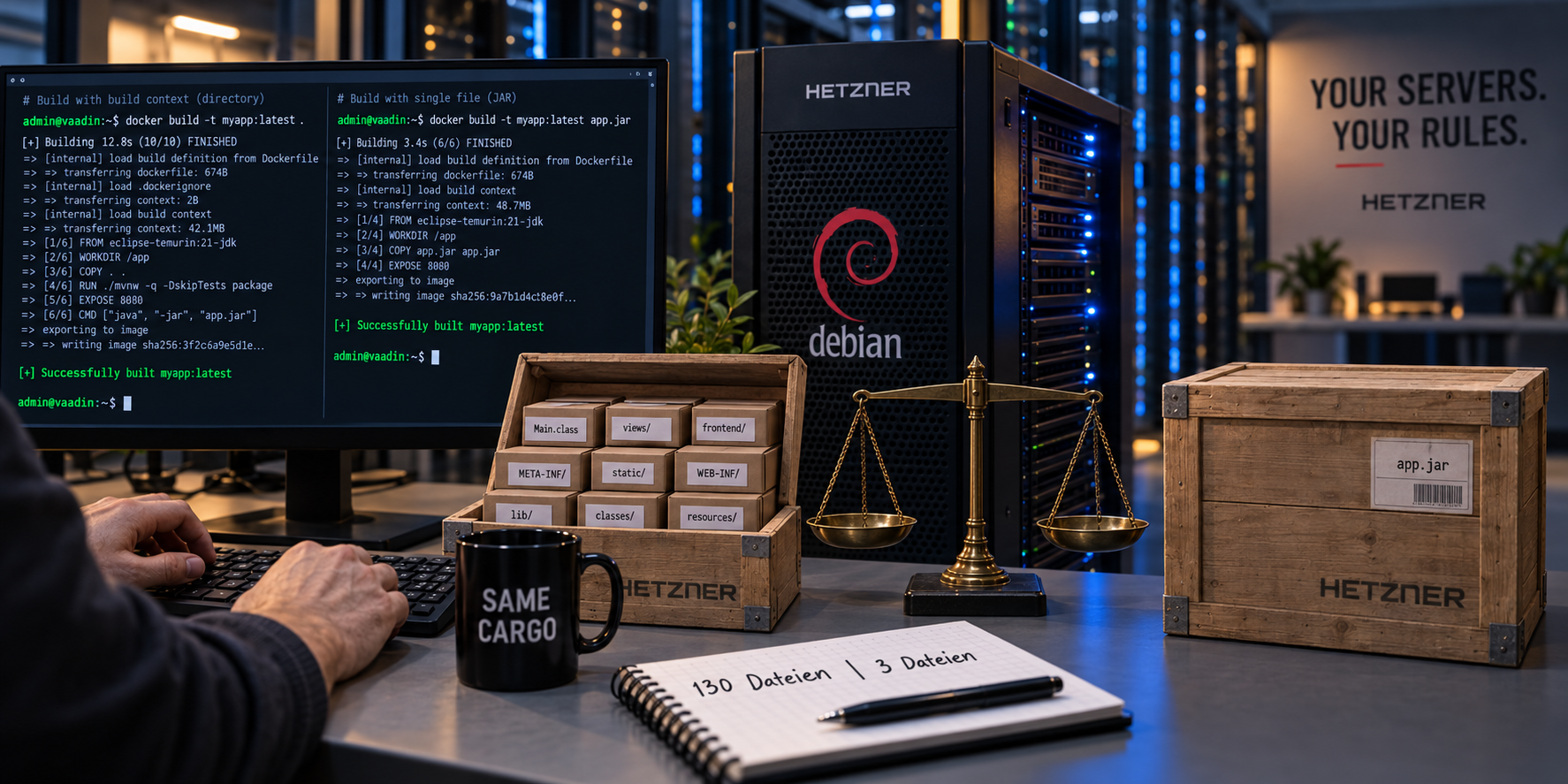
Fourth part of the series Vaadin – Deployment on Hetzner. The focus is not on the bootstrap but on the packaging: one archive or a directory …
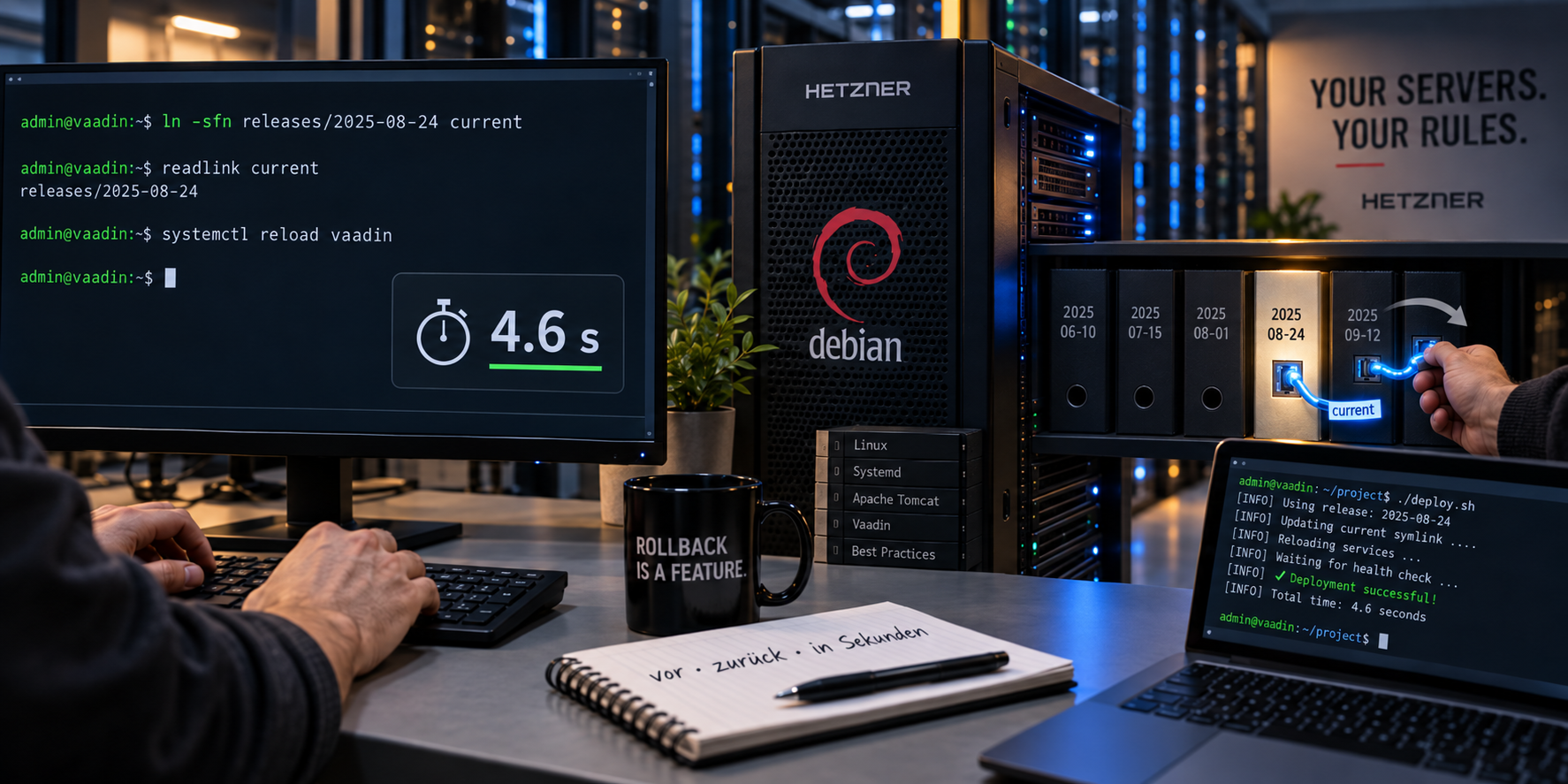
Fifth part of the series Vaadin – Deployment on Hetzner. The two packagings from Part 4 go onto the server: releases in numbered …
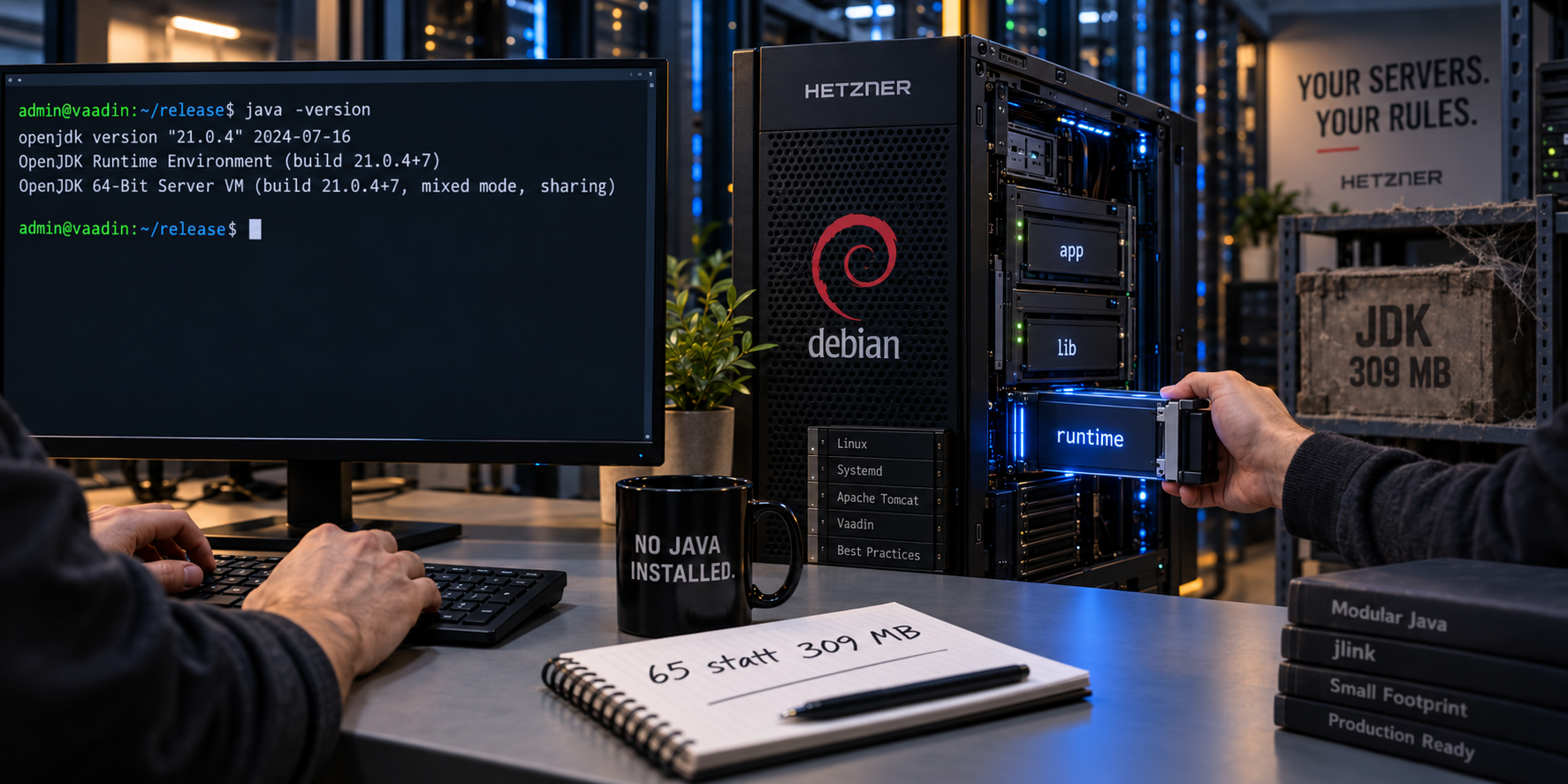
Sixth and final part of the series Vaadin – Deployment on Hetzner. The application now brings along not only Jetty but also its own Java …
Second of two articles about software bills of materials. The inventory is in place — what it can answer, and what it cannot: …
Where we stand The first part ended with a model and a reservation. Anyone who has read it knows both; for anyone joining here, let the …
The Motivation For many years I have managed my writing in ClickUp: the topics I am working on, the individual articles, their translations, …
Part I – The incident A screenplay that isn’t one A program leaves the sealed room in which it was meant to be examined, gains access …